
KEY HIGHLIGHTS
- Comprehensive coverage and live status updates on India Responds To US Senator's Funding Remarks, Says Foreign Funding Rules Are Standard Practice.
- Key statements from government officials and field correspondents.
- Historical context and market/social impact analysis.
- Read full detailed breakdown below.
India Defends Its Foreign Funding Regulations
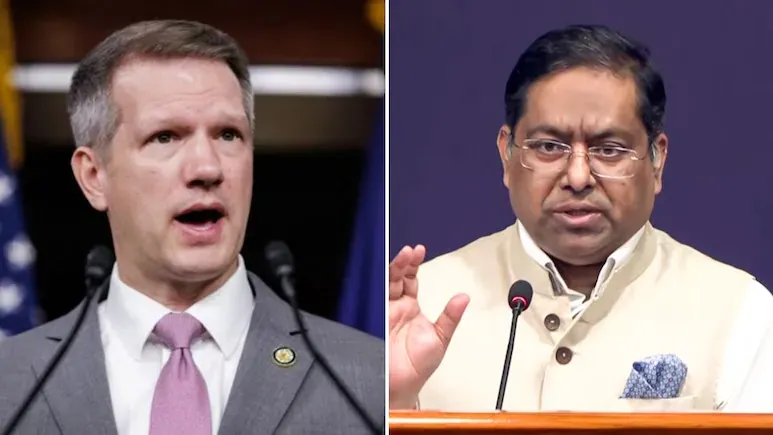
India has strongly defended its regulations governing foreign funding after a US lawmaker criticized the country's policies. Responding to the remarks, the Ministry of External Affairs (MEA) said that India’s rules are in line with international practices and pointed out that the United States also has laws regulating the flow of foreign funds.
STORIES YOU MAY LIKEMEA spokesperson Randhir Jaiswal said India's regulatory framework is designed to ensure transparency, accountability, and the protection of national interests. He stressed that regulating foreign financial contributions is a common practice among democratic nations.
MEA Says US Also Regulates Foreign Funds
Addressing the criticism, the MEA noted that the United States has its own legal mechanisms to monitor and regulate foreign funding entering the country.
"Countries regulate the flow of foreign funds based on their domestic laws and national priorities. The United States also regulates the flow of foreign funds," the spokesperson said during a weekly media briefing.
India argued that its policies should be viewed in the same context as similar regulations implemented by other sovereign nations.
What Is the Foreign Contribution (Regulation) Act?
India's Foreign Contribution (Regulation) Act (FCRA) governs how individuals, associations, and non-governmental organizations (NGOs) receive and utilize foreign contributions.
According to the government, the law aims to:
- -Ensure transparency in the use of foreign donations.
- -Prevent misuse of overseas funds.
- -Protect national security and public interest.
- -Maintain accountability among organizations receiving foreign contributions.
Organizations receiving foreign funds must comply with registration, reporting, and financial disclosure requirements under the FCRA.
India Rejects Double Standards
The Indian government rejected what it described as selective criticism of its regulatory framework. Officials maintained that every sovereign nation has the right to establish laws governing foreign financial inflows based on its constitutional and security requirements.
India emphasized that its foreign funding regulations are applied according to domestic legislation and are intended to promote lawful and transparent financial practices.
Foreign Funding Has Been a Recurring Issue
Foreign funding rules have periodically emerged as a point of discussion between India and some Western governments, particularly regarding NGOs and civil society organizations.
New Delhi has consistently maintained that its objective is not to restrict legitimate activities but to ensure that foreign contributions are used responsibly and in accordance with Indian law.
India-US Ties Remain Strong
Despite occasional differences over issues such as foreign funding regulations and civil society policies, India and the United States continue to enjoy a broad strategic partnership. The two countries cooperate closely in areas including defense, trade, technology, clean energy, and the Indo-Pacific.
- The latest exchange highlights differing views on regulatory frameworks but is unlikely to affect the overall trajectory of India-US bilateral relations, which continue to expand across multiple sectors.





Leave a Comment
Please sign in to join the conversation.
Sign In to CommentDon't have an account? Sign Up